


How much you really need to pay in rental deposits in Denmark
Now that thousands of hopeful students have received their admissions results,
Denmark’s rental housing market is heating up once again. If your studies take place in
Copenhagen, or you’re dreaming of living in another major Danish city, you should be
prepared: the upfront cost of renting can be significantly higher than expected.
For many first-time renters, it can be quite a shock to receive a contract that requires
transferring between DKK 50,000 and 100,000 to a landlord before move-in. That’s a lot
of money – and not something a typical student has saved up in advance. If you’re lucky,
you might be able to borrow from family, but if that’s not an option, student loans
(SU-lån) can offer a more affordable alternative to bank loans.
The total
move-in cost for a rental property includes the first month’s rent, a deposit, and
prepaid rent. Under Danish rental law, landlords may request up to three months’ prepaid
rent (excluding utilities) and up to three months’ deposit. This means the maximum total
amount a landlord can request upfront is equivalent to six months’ rent.
With
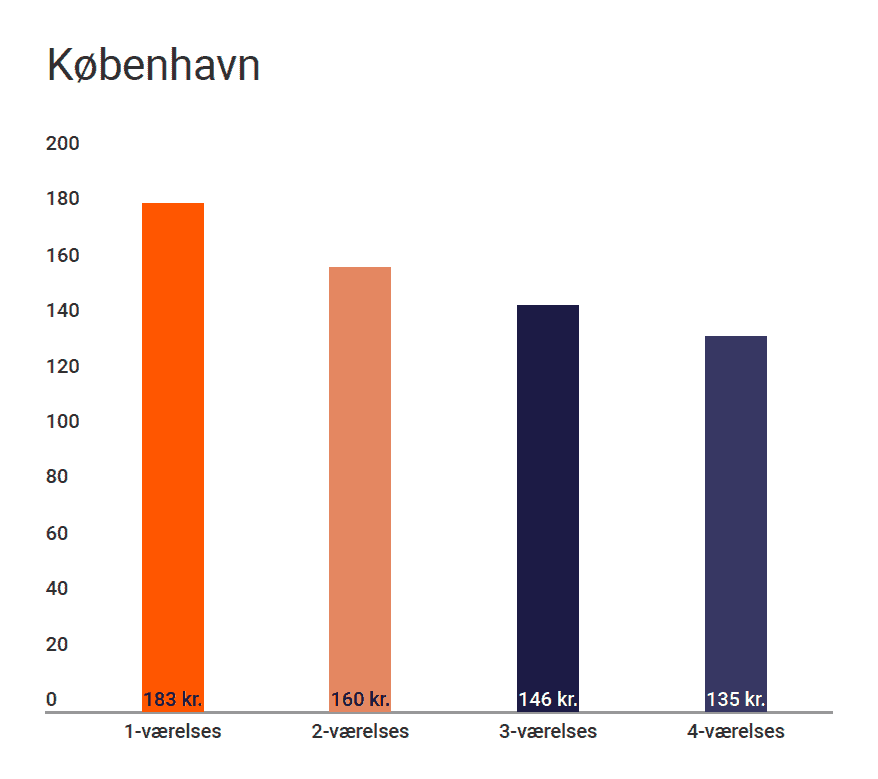
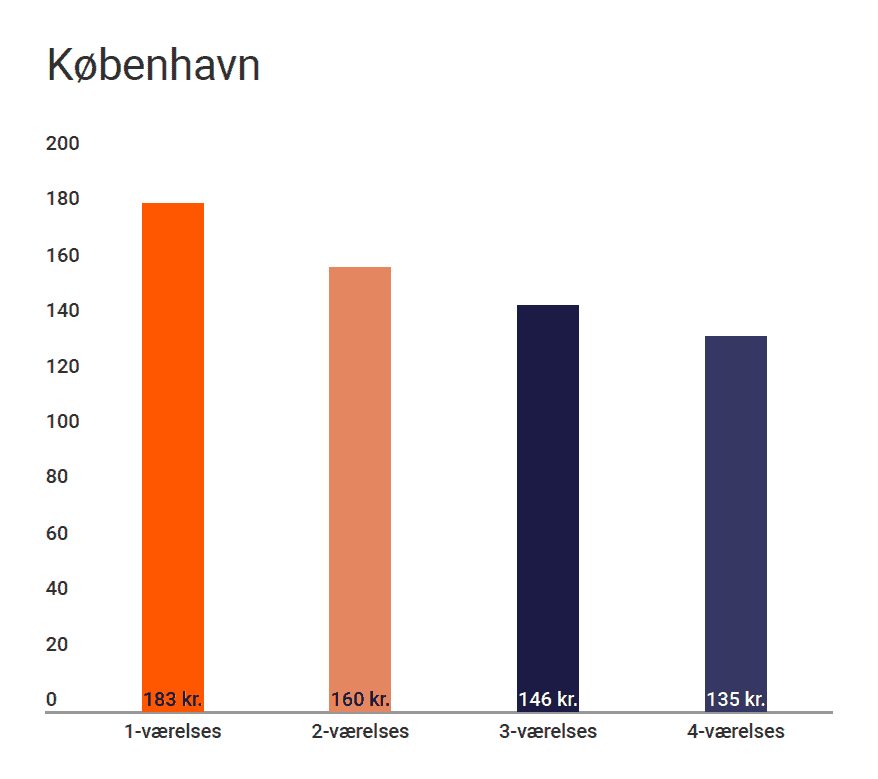
the average price per square meter for a one-bedroom apartment in Copenhagen reaching
DKK 183 (as of 2020 data from Boligportalen), the total cost can quickly add up.
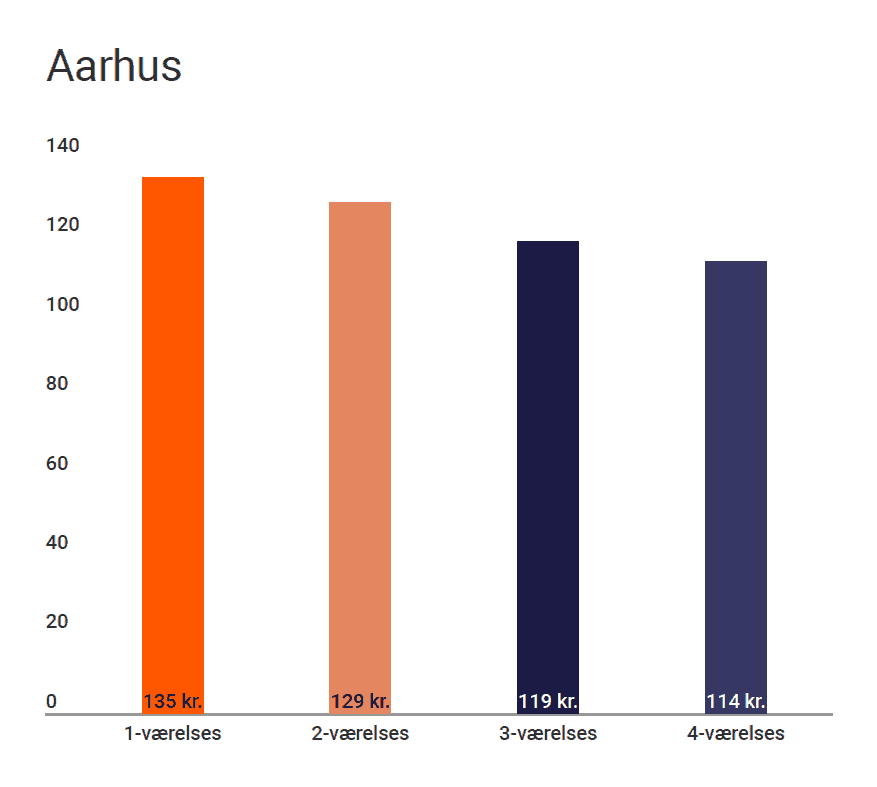
Boligportalen’s
data from January to May 2020 shows average square meter prices for one- to four-bedroom
apartments in both Copenhagen and Aarhus – offering helpful insight when planning where
to live.
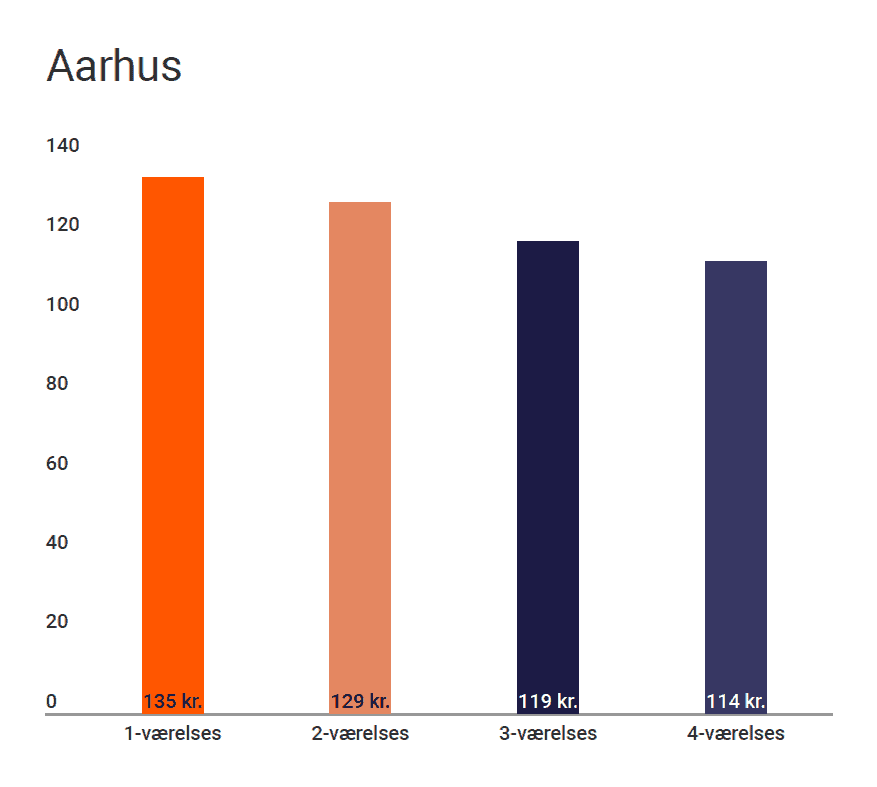
These average prices can help you determine not just where to live but also how much to
start saving – both for rent and the initial deposit. Since the deposit is based
directly on the monthly rent, these statistics give a clear idea of what to expect.
Even
if you find the monthly rent manageable, it’s important to assess whether you can afford
the full move-in cost. These additional costs might also include loan interest and
repayments, especially if you’ve taken a bank loan to cover the deposit.
Don’t panic — You’ll get some of the money back
Prepaid rent typically covers the final months of your lease. This means the money is
not refunded directly, but instead you won’t have to pay rent for the last few months,
depending on how many months’ prepaid rent the landlord charged. A landlord may ask for
up to three months of prepaid rent.
You also have a strong chance of getting
your deposit refunded — if you take good care of the property. Previously, landlords
could use your deposit to completely refurbish the rental after your departure. But
since July 1, 2020, this is no longer allowed.
If you signed your lease after
this date, you’re protected under the updated Danish tenancy law. Landlords can no
longer demand the property be returned in a fully renovated state. They are only allowed
to deduct from the deposit for necessary maintenance or damage caused by the tenant. So
if you treat the apartment well, you’re also protecting both your deposit and your
finances.
High pressure can lead to risky decisions
The large upfront payment usually happens under high pressure. With competition for
rental homes increasing, many tenants feel rushed into signing contracts quickly — often
making them more vulnerable to fraud and scams.
In October 2020, 19 hopeful
renters lost a total of DKK 320,000 in deposit and prepaid rent to a single scammer. TV2
also reported on Hannah Houlind and Nikoline Bredmose, who lost DKK 28,000 in a similar
case. In July 2021, DR told the story of Sidsel and Christopher, who were scammed out of
DKK 23,000.
The truth is, even the most careful renters can fall victim to
rental fraud — and it happens more often than you’d think.
How to stay safe when paying your rental deposit
To avoid becoming part of this growing statistic, we strongly advise using a
secure, third-party financial service that’s specifically designed to protect you.
PayProff was created to protect renters when transferring their deposit to a
landlord they don’t personally know.
We do this by holding the funds until both parties have accepted the transaction.
PayProff partners with Secure Payments, regulated by the Danish Financial Supervisory
Authority (Finanstilsynet), which holds your deposit in a separate escrow account. Our
first priority is ensuring your online financial safety.
In many cases,
recovering your deposit is nearly impossible if you’ve transferred it directly and been
scammed — but with PayProff, your chances of getting the money back are significantly
higher.
So when you’re ready to send your hard-earned deposit to a landlord,
just mention PayProff. If the person you’re dealing with is a scammer, chances are
they’ll refuse. But if they are legitimate and see the benefit of using PayProff to
facilitate the transfer, then you’re well on your way to establishing a safe and
trustworthy rental agreement.